Visar inlägg med etikett rock art. Visa alla inlägg

onsdag 31 juli 2013

Trip to Korea and Japan: Day 12 - Otaru Rocks

(Click here for first day, yesterday and all trips)
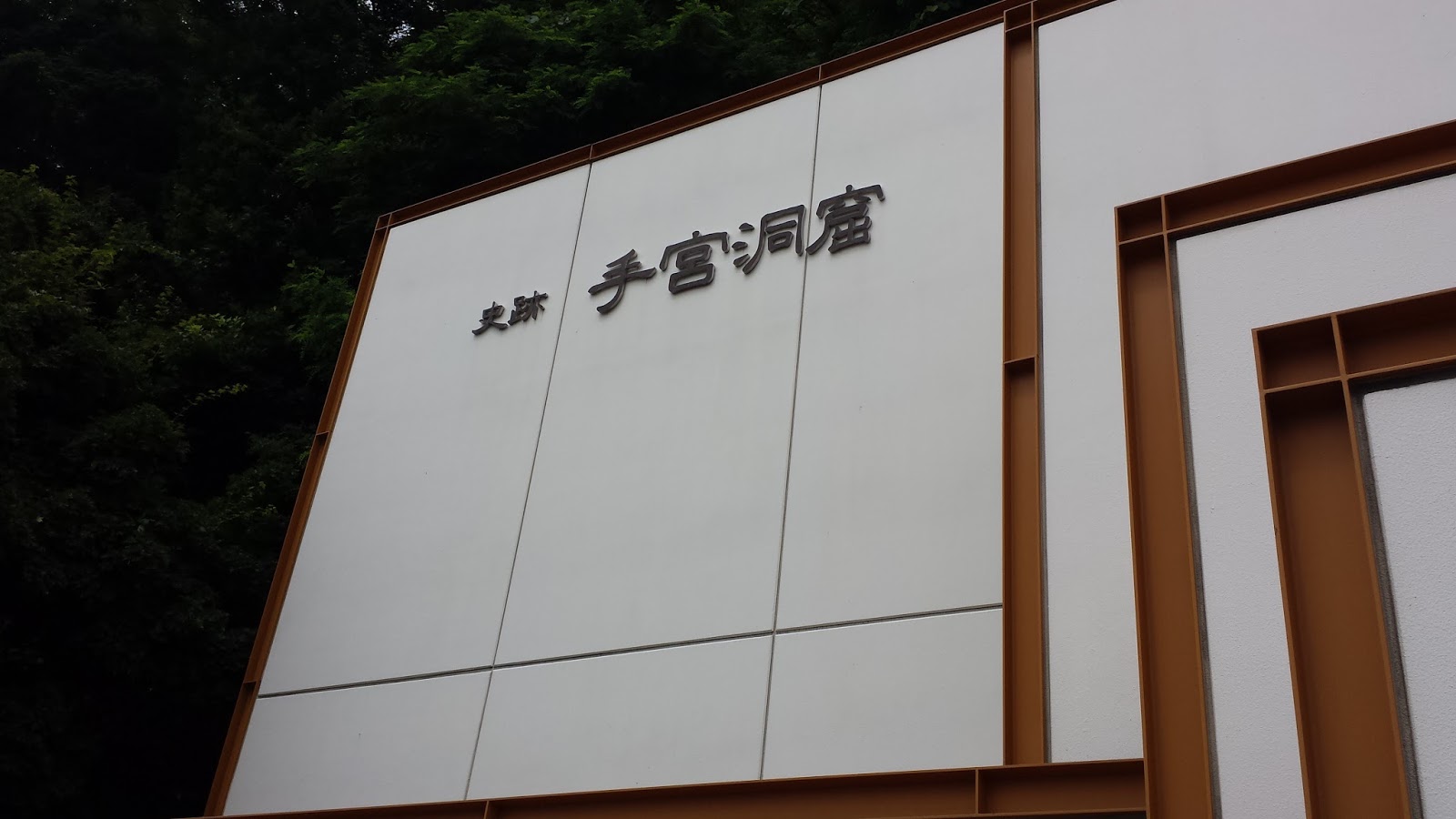
Otaru was my second day of measurements in Hokkaido, and from yesterday's Yoichi and its Fugoppe cave we moved on to Otaru and the Temiya cave. There I again was given such help and hospitality, this time by Mr Ishigami Satoshi. The Temiya cave's rock is also from late Jomon times (300 AD), but differs in several ways from Fugoppe.
It is not really a cave, to start with, as it was found in 1866 when mining rocks at the Otaru coast west of the city. It was then protected for a century only by an open air wooden shelter, which still was lucky as it may as well have been destroyed. The layers covering the rock art also has almost no cultural remains, and the rock in itself is harder than at the Fugoppe site, producing deeper but rougher figures. Still, the erosion was less here (even though the rock gets lots and lots of water in winter) then at Fugoppe. I also got a lot of good advice from the curator of nearby Otaru Museum, Mr Ishikawa Naoaki.

Having done that, I now enter a stage of data analysis, but basically the data collection is done and I can therefore say my trip has been a success here in Japan (and Korea), regardless of the results, and I feel a great relief as it was quite an honor to get the scholarship from SSAG. The immense help I have gotten here in Hokkaido has meant the difference between potential failure and the current success. AT the center of all stand Mark Hudson who went to a lot of work to help an unknown PhD student from the other side of the world. Without him I would not have come in contact with helpful Professor Jeff Gayman who facilitated the contact with my excellent guide and translator, Miss Iki Shuka.
Shuka-san and her mother has shown my the image of Japanese hospitality and opened their home to me during these few days, for which I am very thankful. Miss Iki has an excellent grasp of English and I would recommend her as a guide and translator if you are in Sapporo and she has time to spare from her university studies (sorry Shuka-san if I am putting you out on the job market here, I just had to tell them how good your english is ^_^).

Anyway, after finishing up with the measurements, we walked down to Otaru center. Otaru is the kind of famous tourist spot that Japanese and foreign visitors go to to walk along picturesque streets with small stores, a water canal, and maybe for a romantic weekend. It used to be the central (and large) port of Hokkaido and it has a city plan that consist of quite a lot of small streets and such. If you come to Sapporo for vacation, Otaru is simply one of the places to go.

In the evening I got invited to the home of Shuka-sans family for dinner and an overnight stay (again, the hospitality,eh!). Her mother has her own atelier and the family has a tradition of creative work, her uncle for example doing very beautiful mosaics. I got treated to all different kind of local tastes, it was really good (oishiiii!).


Otaru city center

Covered arcade

Miss Iki showing me the food stalls


Old railway turned to a green corridor in a quiet and soft neighbourhood


Crisper chicken is hard to find. They actually sells the chicken by telling how good the outside is.


Naruto is the name

Temiya museum


We killed some time at the local hardware store. Which sold pets. Kawaii!

If you look at this extremely cute hamster he looks like he prays when he is drinking


The rock art at Temiyu


(Click here for the next day)

måndag 29 juli 2013

Trip to Korea and Japan: Day 11 - Cave, Whiskey and Onsen

(Click here for first day, yesterday and all trips)
The day started with rain and sirens as a car had somehow managed to flip on its roof just outside, but it seemed like relatively undramatic by the time I woke up. Today was an important day as I was going to meet up with my guide and translator, miss Shuka, to go to the small town of Yoichi and visit the Fugoppe cave and its rock art. When we met up at JR Sapporo Station I got a pleasing surprise as it turned out that her mother, an artist and teacher, would join us for the day as she is an ardent fan of Youichi and its surroundings, so my lucky string of getting a lot of personal and enjoyable contacts here in Japan continued.
We went by train to Yoichi and had a very enjoyable Osaka-style lunch at a restuarant just across from the railway station. After that we actually got picked up by the museum attendant Mr Yoshihiro Inui who drove us there in his car. The rock art at Fogoppe cave was made by hunter-gatherers of the Jomon period, which came before the Ainu people and of whom possible the Ainu are descendants. It was hidden by an earthquake in the 7th century and then found again in 1950 and then protected by the glass chambers in 1969. I wont go into details but the measurements went exactly as I expected and would have them, and Mr Yoshihiro was extremely helpful with everything and I actually got several thick publications from his as an extra gift. He then afterwards even drove us to the Nikka Whiskey distillery.
There they had free tasting so if you tried everything you would actually risk getting a little woozy.
After that we went to what I may actually have been more nervous about than the rock art measurements, and that was the local Onsen bath. As many of you interested in Japanese culture, going to these public baths is both an excellent chance at having a nice Japanese cultural experience but also to do the wrong things. The event about foreigners being banned mentioned in the article above actually was in the city just next to Yoichi (in Otaru) so it didn't exactly lessen my worries.
In the end I think it did go well, and it was indeed an experience I will treasure having partaken in. I could obviously not take any photographs from this time but what happened was roughly as in the article:
1. Pass through curtains to changing room.
2. Undress completely
3. Bring your towel and soap with you and enter the baths.
4. Wash yourself properly sitting on low stools and wash yourself carefully to remove all soap etc. Possibly ue towel or scrubbing thingie for this.
5. Enter bath with towel on head or next to bath.
6. Enjoy bath.
7. Possibly go to next room where there may be an open air bath. Otherwise/Later
8. Shower with water now feeling almost cold in comparison.
9. Dry yourself with your towel.
10. Exit baths.

Thats the theory. What I can add is:
a) Better to bring liquid soap than a traditional soap (like I bought at the JR station) as it is easier to keep afterwards.
b) Evidently the japanese have no problem wringing the water out from their towel after bathing and using this (for me) wet towel to "dry" themselves. ^_^ This didn't even enter my head, so what I did was put my towel an a shelf next to the showers and then retrieved it afterward the bathing was done.
c) To be really sure none of the locals would take offense, I soaped myself *three* times. This may indeed have been overkill, but on the other hand I became squeaky clean and I could relax more afterwards. Somehow I also after each soaking relaxed more and more and began forgetting the unusual feeling of being all naked with other naked strangers in a new situation and got into it.
d) I had heard the baths can be really hot but I had no such problem. Still, about 15 minutes was enough for me and it took me maybe another 15 minutes in front of a high speed fan in the relaxation room to get my body temperature down afterwards.

Afterwards we ate a very affordable dinner at the onset, with squid and pork cutlet in my case. Then it was the last bus home to Sapporo at 8 pm.


Sumimasen, this picture was not sharp, will do another one tomorrow, Shuka-san, but your mother is smiling so lovely I had to show it.

The usual cold tea as a starters and some local cherries.

All this for just 1000 yen each, eh! (66 SEK/11 USD)

*And* this excellent desert that I really cant begin to explain the taste of. Oishii! as they say in Japan.

The small hill of the Fugoppe cave


Inside even the glass protection...this is the part I photographed.


The material of the rock was tuff, and is created from volcanic ash and is a soft material that it was easy to see had been affected by erosion.


Three sorts of whiskey to try and then some apple wine and...

...apple juice.

The Nikka whiskey can actually be found in every small store but some of them at the store here was only sold at the shop, which made for a nice present.

Resting room at second floor after the onsen bath where we also ate dinner.


Excellent squid for starters

And another fine meal for 600 yen (yes, thats only 40 SEK/6 USD)

(Click for the next day)

söndag 21 juli 2013

Trip to Korea and Japan: Day 3 - Relations, Robots and Rock petroglyphs

(Click here for the first day, yesterday or other trips)
Had recieved my luggage last evening, and seeing coming days having clouds and rain in the weather forecasts, this was the day I felt I had to do my measurements which I came for. As said in the outlines of my trip, for data I photograph rocks and rock art in different settings with my IR (infrared) camera. For the Ulsan sites, I wanted as much sunlight as possible, ergo this day was promising. Now to get there. The sites are up in the wilderness towards the mountains, roughly 2 hours from the city. By, car probably not more than 1h10 min - 1h30min, but I will be going on the budget alternative, ie buses. Now, I will actually go into more detail than necessary in regards to bus travel...
On Saturday, I entered a bus two times and both times saw only a kind of thing for travel cards you put your card against, so I showed the driver a 10000 Won bill both times (which should cover it) but both times I was waved away, so I ended up going for free.
This day I was going with two buses one way, in total four rides, so I couldn't keep on doing that regardless if my concience had allowed it, so I went for a walk to the railway station in the early morning. There I waited for the tourist information to open at 9, and got it all explained:
There is actually a kind of transparent plastic box in the front, much like the one you use for charity purposes, where you put the money...so obvious when you know what to look for. There are just two price categories: 1150 Won (8 SEK/ 1,2 USD) for buses with 3 number in them, and 1700 Won (11 SEK/2 USD) for the ones with four numbers. So, I went to look for the first bus, 1703, but didnt find it.
Being my second time in Korea, I must confess I hadnt really met any Korean that I had actually gotten a real lasting positive conenction with. Not that I had ever had any negative, either, but I had simply not gotten beyond hello, thanks and goodbye.
So, at the busstop, having shown a handwritten note from the helpful person at the information desk, and gotten nothing understandable from the drivers, an old man intervened and took me under his wings. He showed me the bus (which he was also going with), chekced that I had the right amount of money, and told me where to get of (NOT the place I would have left the bus on). Small things means so much, and it set the tone for the day.
Even though my Google Maps wasn't on the spot in regards to the spot for bus change, I actually saw the next bus from afar when stepping of, but it was already leaving. Checking my map, I saw I shortcut and sprinted for it...and got on the bus. They actually go rather seldom at this spot (Eonyang), so that was lucky. My eyes checking my photos of the bus route on my phone, I soon was distracted when the bus went in the wrong direction, but it actually was just an extra loop not on the internet. What instead happened was that somehow the scale on my maps, going into the countryside, was not what I thought so I had passed my bus stop when I realised this. So there I stood, with a sign showing that the place I wanted to was 4.5 km away. At least it was something, even though I would be soaked through by then.
Then it happened again - the same bus as I went with, now going in the other direction, stopped and the bus driver leaned out and asked "Bangudae?" ie the place I was heading for! He gave me a ride back (for free) to the right place and pointed the road out to be sure. There is something about nature and hospitality, right? ;-)
To sum the route up. First take the 1703 to Eonyang (first stop aftyer it gets of the big motorway as I remember it). Then catch the 308 and travel to the spot marked below as "B". It is easy to miss so store up on lots of map screenshots on your phone...if you got of at the right spot, there is a bridge just close by over the motorway and then its just straight ahead.


Soon it was even more obvious on the winding, forest fringed road, that I was on the right track, as the surroundings was obviously prepared for toursim with special toilets and parking places, decorations and special walkways. Reaching the Bangudae Petroglyph Museum, to tell it shortly, the Bangudae site consists of mostly animal etchings, most importanly of the whales and whaling culture that existed here long ago. The Cheonjeonri site instead has more of geometric patterns. The later one was the one I chose for my measurements, being easier to access. It was also interesting as it wasn't made on a face facing away from the sun midday (as most of the ones I have seen do), instead it faced almost directly east. Ah, I will stop there. Suffice to say, it is a soaking to stand completely still for even five minutes doing photgraps every 5 second in this humid 35 degree heat.


Shell mask. A bit funny.

This is a replica from the museum of the exact spot I later used for IR photographs.

The nature was quite pleasing and the museum a modern, fresh (airconditioned!) type that does its best to make history alive. As Korea are trying to make these sites a World Heritage, I do understand why they have gone into so much effort.


Wrapping up, I began to leave from the Cheonjeonri side, when reaching the small exit post where two elder ladies (ajummas [swedish:tanter] in the words positive sense) manned the post. I stopped just to ask for where to buy water and ended up getting water (and coffee if I'd wanted), peaches a elder man brought, and simplistic but warm conversation). Third time is the charm as they say, and this was the day I warmed up to Korean people beyond the fantasy world of korean pop and drama.

 Korean countryside is quite lovely.

Can you spot the petroglyphs? Noone could from this spot, the normal allowed distance. And usually the dam covers them up at this time of year but it have been a dry season.


Petrified dinosaur footsteps

Cheonjeon-ri rock petroglyphs. Look carefully and you may see them
I got home safely and was planning to call it a day at 15.00 already but somehow couldnt stop myself when out getting a burger menu at the local Lotteria (local McDonalds equivalent), and went and checked out the movies at Lotte Cinema.
There was this Pacific Rim...well, I thought, I know it is some kind of giant robot movie, cant be to bad even if its dubbed. And it wasnt dubbed. And it was damn good enteratinment too!
It is quite fitting, I felt, to watch a movie in East Asia where giant robots controlled by humans (ie Mechas) fight it out with Aliens attacking Pacific coastal cities.

The movie was like a new Independce Day, which means lots of big action and fighting, some humor and romance, but above all is the action and effects. And some proud speeches (really only one). But, shit, if the fights werent satisfying. The movie is really all about them and the rest just has to do its part as fillers, not that those parts are anything bad, they do their work quite nicely. If you would love a movie about Steel Giants, Guiellermo del Toro - style - monsters, and a fair Rinko Kikuchi as the heroine, look no further. ^_^

Korean lesson number 2:
Movie title:
파시픽림
Divided into individual letters:
ㅍ  ㅏ   ㅅ   ㅣ   ㅍ  ㅣ  ㄱ  ㄹ  ㅣ  ㅁ
Which in latin letters become:
p  a   s   i   f (p/f is the same letter) i  k  r  i  m
Which then is read like:
Pasifik Rim = Pasific Rim
That wasn't too hard, eh?

(Click here for the next day)